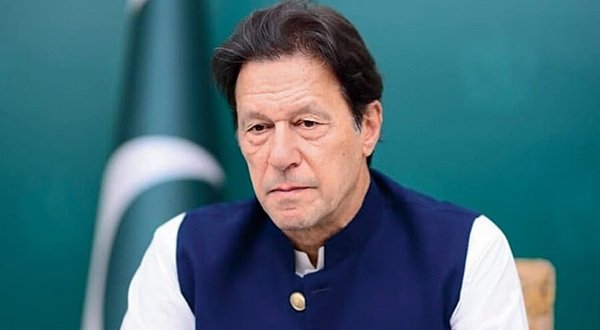
The Supreme Court of Pakistan on Thursday directed authorities to constitute a medical board to assess former prime minister Imran Khan’s eye condition, following a court submission in which the PTI founder stated that only 15 percent vision remains in his right eye.
Here is a clear, concise rewritten version of the provided text, maintaining accuracy while improving flow and readability:
The Supreme Court (SC) directed that Imran Khan be permitted to speak with his children and ordered that both the eye examination and telephone calls be completed before February 16 (Monday).
The directions were issued by a two-member bench led by Chief Justice of Pakistan (CJP) Yahya Afridi, with Justice Shahid Bilal Hassan, as it resumed hearing a case concerning the PTI founder’s living conditions at Adiala Jail.
During the proceedings, it was revealed that Imran had undergone a medical procedure at the Pakistan Institute of Medical Sciences (PIMS), Islamabad, on the night of January 24—information that reportedly reached his family several days later.
Emphasising the seriousness of the matter, CJP Afridi observed that Imran’s health was of paramount importance and required intervention. He asked the government to clarify its position, to which Attorney General for Pakistan Mansoor Usman Awan responded that providing medical care to prisoners was the state’s responsibility, adding that further measures would be taken if the inmate remained unsatisfied.
The chief justice also highlighted the importance of Imran’s communication with his children, remarking that the court was placing trust in the government’s assurances.
Advocate Salman Safdar, appointed as amicus curiae, met Imran at Adiala Jail and later submitted a seven-page report to the SC detailing the former prime minister’s living conditions. In the report, Safdar quoted Imran as stating that despite medical treatment—including an injection—his vision in the right eye had deteriorated to only 15 percent. Imran said that until October 2025, he had normal vision in both eyes but began experiencing persistent blurriness, which he repeatedly reported to jail authorities without any action being taken.
According to the report, Imran later suffered a sudden and complete loss of vision in his right eye, after which a PIMS ophthalmologist diagnosed him with a blood clot that caused severe damage. Safdar noted that Imran appeared visibly distressed during their meeting, with watery eyes and signs of physical discomfort.
However, the SC declined a request to have Imran’s eye condition examined in the presence of his family members. On the matter of providing books to Imran, the attorney general said this would be decided after consultation with eye specialists.
Reviewing reports from both Safdar and the jail superintendent, CJP Afridi remarked that the findings largely aligned and indicated that the facilities provided were satisfactory. Since Imran’s family visitation issue was already pending before the Islamabad High Court, the SC said it would be appropriate for that forum to decide.
The report further stated that Imran had not received regular blood tests and that his personal physicians—Dr Faisal Sultan and Dr Asim Yusuf—were denied access despite repeated requests and a worsening eye condition. For nearly three months, his treatment allegedly consisted only of eye drops, which provided no improvement and was followed by severe vision loss.
Imran also claimed that despite being 73 years old and requiring dental care, he had not been examined by a dentist for two years. Safdar noted that Imran attributed the lack of medical attention to the tenure of former jail superintendent Abdul Ghafoor Anjum, who was transferred on January 16, 2026, and replaced by Sajid Baig.
The current jail administration informed Safdar that Imran was under the care of PIMS ophthalmologist Dr Muhammad Arif and that jail doctors were recording his vital signs three times daily.
Meanwhile, a medical report dated February 6—signed by PIMS Executive Director Prof Dr Rana Imran Sikander and submitted to the SC—confirmed that Imran had been diagnosed with right central retinal vein occlusion following a comprehensive eye examination conducted at Adiala Jail. The report stated that Imran was taken to PIMS on January 24 for an anti-VEGF intravitreal injection, which was administered after obtaining informed consent and completed without complications.
Safdar, however, noted that the medical report lacked full details of the episode and did not identify the ophthalmologist who conducted the examination and treatment.