Understanding Anxiety: Causes, Symptoms, and Natural Ways to Heal
Do you often feel restless or anxious? Does your heart race, your mind get stuck on one thought, and your sleep stay disturbed? If these symptoms occur frequently, you may be experiencing anxiety disorder. When anxiety becomes intense, it can even turn into panic attacks, bringing sudden fear, breathlessness, and loss of control.
Many people rely on medications for relief. However, with the right understanding, natural remedies, and science-based lifestyle changes, anxiety can often be managed—and in many cases improved—by correcting daily routines and supporting the body’s natural systems.
This blog explains:
-
What anxiety really is and how the brain works
-
Why the body reacts even when there is no real danger
-
Short-term techniques for immediate relief
-
Long-term lifestyle strategies for lasting recovery
What Is Anxiety and Why Does It Happen?
Anxiety is not weakness. It is actually the brain’s protective alarm system. Allah has created an automatic mechanism in our body that activates whenever we face stress, pressure, or fear. This system is called the fight-or-flight response, controlled by the sympathetic nervous system.
The Fight-or-Flight Mechanism (Simple Example)
Imagine you are walking in a forest and suddenly see a lion in front of you. Instantly:
-
Your heart rate increases
-
Blood pressure rises
-
Breathing becomes fast
-
Sweating starts
-
A strong feeling of fear appears
This reaction happens to protect you and help you survive danger.
The same thing happens if a car suddenly appears in front of you while driving—your body reacts within seconds. This is normal and healthy.
The Core Problem in Anxiety Disorder
In anxiety, the danger is not real, but the brain believes it is.
The brain does not differentiate between reality and imagination.
For example:
-
Just thinking about sour food can make your mouth water
-
Even when the food is not actually there
Similarly, in anxiety:
-
No real threat exists
-
But the brain imagines danger
-
The body reacts as if the “lion” is real
👉 Feeling danger without danger = Anxiety
Normal Anxiety vs Anxiety Disorder
Normal Anxiety (Healthy)
-
Before an exam
-
Before an interview
-
Before an important event
This type of anxiety improves focus and performance.
Anxiety Disorder (Unhealthy)
-
Fear without any real reason
-
Avoiding social gatherings
-
Panic in closed rooms (fear of suffocation or heart attack)
-
Gas or fullness mistaken as heart problems
When this fear becomes persistent and limiting, it is called anxiety disorder. Life slowly becomes restricted, and confidence decreases.
Short-Term Relief: Calm Anxiety in Minutes
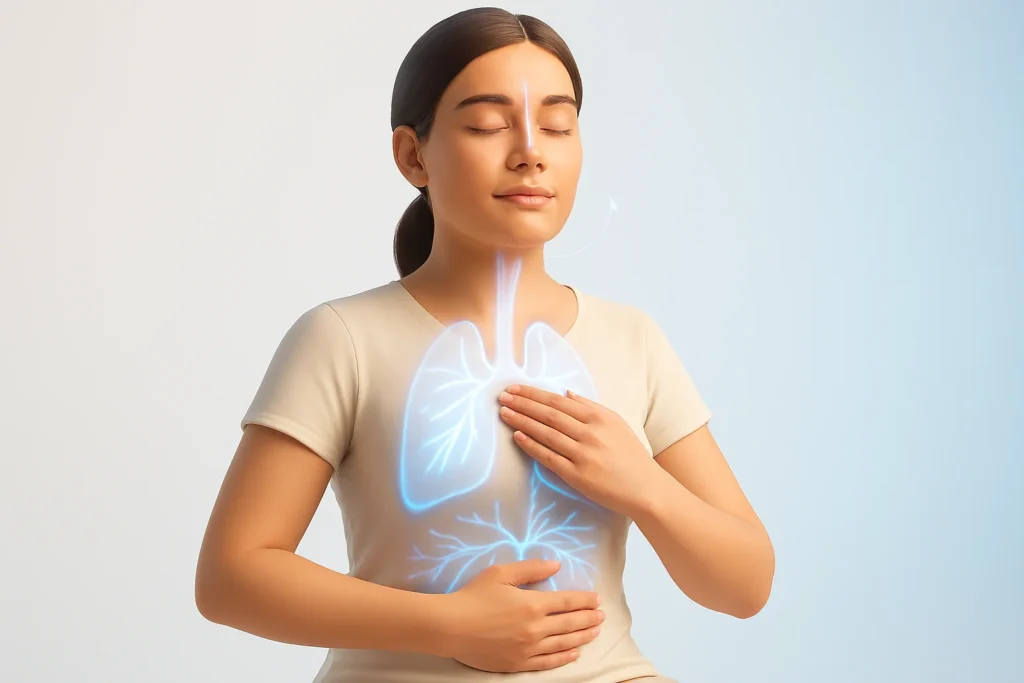
🌬️ Deep Breathing (4-7-8 Technique)


Deep breathing is scientifically proven to calm anxiety quickly by activating the parasympathetic nervous system (rest and recovery mode).
How to Practice the 4-7-8 Method:
-
Sit in a relaxed position
-
Close your eyes
-
Inhale through your nose for 4 seconds
-
Hold the breath for 7 seconds
-
Exhale slowly through the nose for 8 seconds
✔ Practice 1–2 times daily
✔ Always use it when anxiety symptoms appear
Why it works:
-
Brings the mind into the present moment
-
Increases oxygen in the blood
-
Slows heart rate and lowers stress
-
Shifts the body from panic to calm
Anxiety is fear of the future. Deep breathing brings you back to now.
Long-Term Management: Lifestyle Changes That Heal Anxiety
1. Improve Gut Health (Very Important)
The brain and gut are deeply connected. Around 90% of serotonin (the mood chemical) is produced in the gut.
If digestion is weak:
-
Mood becomes unstable
-
Anxiety and stress increase
-
Panic attacks become frequent
What helps:
-
Eat home-cooked food
-
Avoid junk and processed food
-
Practice intermittent fasting (if suitable for you)
-
Give your digestive system rest
👉 A healthy gut = a calmer mind
2. Be Careful With Long-Term Medication
Many anxiety medicines (SSRIs) may give temporary relief but can:
-
Disturb gut bacteria
-
Reduce natural serotonin production
-
Create dependency over time
With professional guidance, focus on natural healing and gradual routine correction, instead of lifelong dependence.
3. Increase Vitamin B Intake
Vitamin B has a direct link to mood disorders.
-
Poor digestion = poor Vitamin B production
-
Low Vitamin B = anxiety, stress, low energy
Tips:
-
Improve gut health first
-
Use methylated (bioavailable) Vitamin B supplements
-
Choose high-quality, well-absorbed brands
4. Exercise to Release the “Hope Molecule”
Muscles release special chemicals during exercise that:
-
Reduce anxiety and depression
-
Increase stress tolerance
-
Improve emotional balance
You don’t need a gym. Any activity that:
-
Makes you slightly breathless
-
Causes light sweating
is enough.
✔ Walking
✔ Home workouts
✔ Light gym training
✔ Exercises for all age groups
This natural chemical works better than artificial stimulants.
5. Improve Deep Sleep (Repair Mode)
The body repairs itself only during deep sleep.
Poor sleep leads to:
-
Increased anxiety
-
Emotional instability
-
Low mental resilience
Focus on:
-
Regular sleep timing
-
Reduced screen exposure at night
-
Light dinner
-
Calm bedtime routine
Better sleep = better emotional control.
6. Spiritual Connection for Inner Peace
True peace does not come from control—it comes from trust.
-
Anxiety increases when we try to control the future
-
Calm returns when we focus on the present
Helpful practices:
-
Regular prayers
-
Quran recitation
-
Staying in wudu
-
Morning recitation after Fajr
“Hearts find peace in the remembrance of Allah.”
Let go of future worries. Do your part, and leave the rest to Allah.
Final Thoughts
Anxiety is not permanent. It is the body asking for balance—physically, mentally, and spiritually. By understanding how anxiety works and supporting your body naturally, you can gradually return to calm, clarity, and confidence.
✨ Focus on routine
✨ Support digestion
✨ Breathe deeply
✨ Move your body
✨ Sleep well
✨ Strengthen spirituality
With consistency, relief is possible—Insha’Allah.