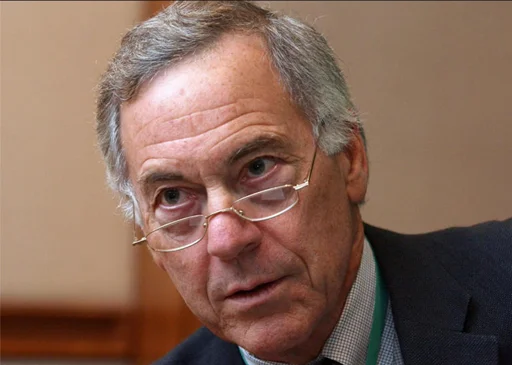
Steve Hanke Warns AI Is “Overhyped and Potentially Dangerous”. Artificial intelligence may be dominating headlines and investor portfolios, but veteran economist and trader Steve Hanke believes the excitement has gone too far.
In an email to Business Insider, Hanke said there is excessive buzz surrounding AI — and warned that it could end badly. He described the current enthusiasm as potentially irrational and said the technology is “overhyped and potentially dangerous.”
Backing Yann LeCun’s Skepticism
Hanke aligns himself with AI pioneer Yann LeCun, the former chief AI scientist at Meta and one of the most respected voices in artificial intelligence research.
LeCun has publicly questioned the revolutionary status of large language models (LLMs) such as ChatGPT. In a spring 2024 speech, he argued:
“We’re easily fooled into thinking they are intelligent because of their fluency with language, but really, their understanding of reality is very superficial.”
LeCun acknowledged that chatbots have practical uses, but added that in the pursuit of human-level intelligence, LLMs are “basically an off-ramp, a distraction, a dead end.”
Hanke said he is firmly “on LeCun’s side of the court,” reinforcing his belief that today’s AI wave may not be as transformative as many claim.
A Potential AI Bubble?
Hanke, a professor of applied economics at Johns Hopkins University, has previously warned that the AI boom could resemble a market bubble.
Last October, he said whether the current market exuberance proves rational or irrational will “largely depend on whether the AI firms’ spectacular revenue forecasts hold water.” His advice to investors was blunt:
“It might be wise to buckle your seat belt.”
Hanke’s track record lends weight to his caution. He served as president of Toronto Trust Argentina when it was the world’s best-performing market mutual fund in 1995 and previously acted as an economic advisor to Ronald Reagan.
The AI Spending Frenzy
Despite skepticism from Hanke and others, the AI boom shows little sign of slowing.
OpenAI is reportedly close to raising more than $100 billion at a potential $850 billion valuation. The company behind ChatGPT crossed $20 billion in annualized revenue last year.
Meanwhile, tech giants are pouring staggering sums into AI infrastructure:
-
Meta
-
Amazon
-
Alphabet
These companies have projected combined capital expenditures of up to $520 billion in 2026. Microsoft alone is on track to invest more than $100 billion this calendar year.
After more than a decade at Meta, LeCun recently departed to launch Paris-based AMI Labs, focused on developing open-source AI capable of modeling and understanding the physical world — not just generating language.
Other High-Profile Skeptics
Hanke is not alone in sounding alarms.
-
Michael Burry, famous for predicting the 2008 housing crash portrayed in The Big Short, has warned that tech giants may be overinvesting in microchips that could quickly become obsolete.
-
Jeremy Grantham, GMO’s long-term investment strategist and known “bubble guru,” has cautioned that transformative technologies — from railroads to the internet — historically sparked bubbles that eventually burst. He expects AI could follow a similar path.
The Optimists Push Back
On the other side of the debate are prominent AI champions.
Figures such as Elon Musk and Sam Altman argue that AI will dramatically boost productivity, reshape industries, and generate massive profits — justifying today’s soaring valuations.
Believers vs. Skeptics: What Happens Next?
The divide between believers and skeptics highlights the uncertainty surrounding AI’s long-term impact. Is the technology truly revolutionary, or are markets running ahead of reality?
For Hanke, the answer remains clear: the hype is excessive, the risks are real, and investors should prepare for volatility.
As the AI boom accelerates, the key question is whether revenue growth and real-world breakthroughs can match the enormous expectations — or whether today’s optimism will eventually give way to a painful correction.